
Studio Safety 101: Keeping Your Team and Talents Safe During a Full-Day Shoot in Singapore
You're planning a full-day corporate shoot. Multiple team members. Talent on set for hours. Heavy equipment in motion. Bright lights. Long cables. Moving equipment rigs.
May 14, 2026 • gradepixel
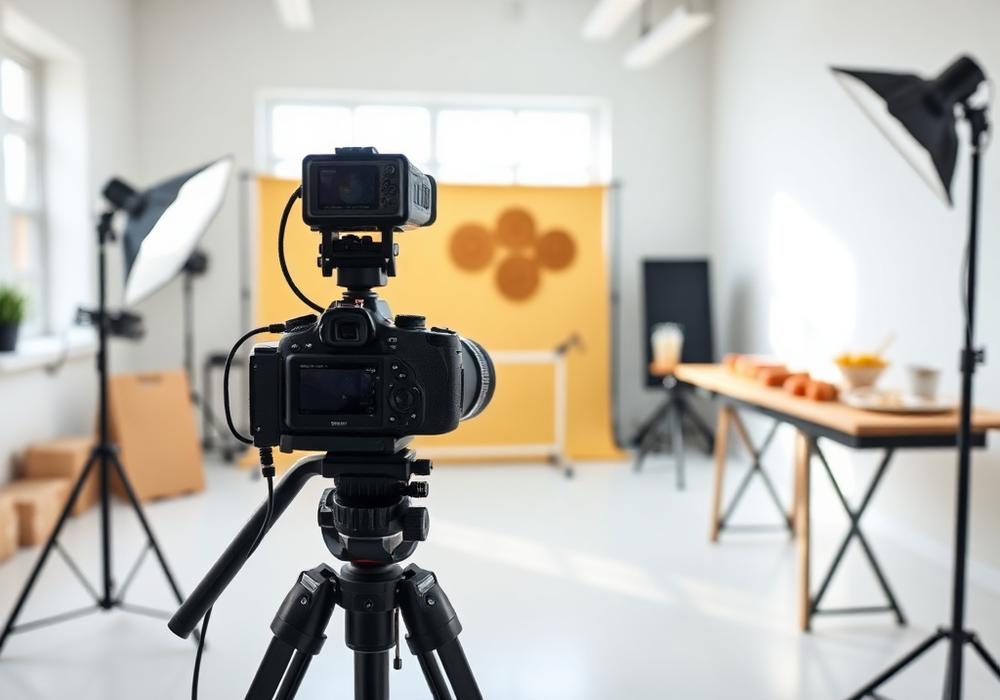
A full-day photoshoot in a professional studio looks controlled. It looks safe. People moving purposefully, equipment positioned precisely, everything locked down.
That appearance of control is intentional. It’s the result of systems, discipline, and experience—the invisible infrastructure that keeps your team and talent safe while shooting for 8+ hours.
And it’s essential.
A professional studio isn’t just a space with good lighting. It’s a managed environment where every cable is routed safely, every piece of heavy equipment is secured, every team member knows where hazards are, and every decision prioritizes the safety of everyone on set.
This matters more than you might think—especially for corporate teams and brands planning large-scale shoots. Studio safety isn’t about being overly cautious. It’s about professional responsibility and the trust you place in your production team.
After managing hundreds of full-day shoots across product, corporate, and branded content work, we’ve learned that safety practices separate professional studios from amateur setups. And for clients planning ambitious shoots, understanding a studio’s safety standards is as important as understanding its lighting capabilities.
Why Studio Safety Matters for Large-Scale Projects
You’re planning a full-day corporate shoot. Multiple team members. Talent on set for hours. Heavy equipment in motion. Bright lights. Long cables. Moving equipment rigs.
Now add real pressure: deadlines, multiple setups, changing scenes, fast-paced execution.
In that environment, accidents happen if safety systems aren’t in place.
Real risks in a studio setting:
- Trip hazards. Cables across floors cause falls. A team member or talent going down is a liability nightmare.
- Equipment collapse. A badly secured boom arm, unsupported tripod, or unstable light rig can drop gear—or worse, hit someone.
- Power issues. Overloaded circuits, loose connections, or wet environments near lights create electrical hazards.
- Sustained positioning. Talent standing, sitting, or positioning for hours without proper support or breaks leads to injury.
- Team fatigue. A 10-hour shoot without proper rest and hydration affects judgment and increases accident risk.
For corporate clients, these aren’t theoretical concerns. They’re liability issues. Insurance matters. Trust matters.
A professional studio manages these hazards through systems and discipline. An amateur setup ignores them and hopes nothing goes wrong.
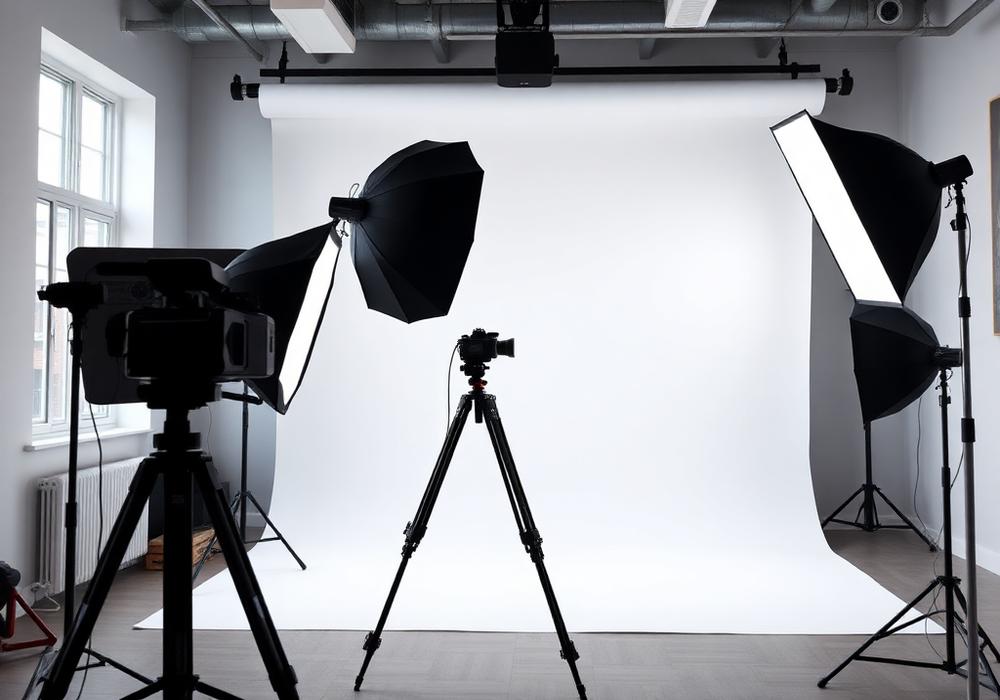
Cable Management: The Foundation of Studio Safety
Cables are the hidden danger of any studio.
A typical full-day shoot might involve 15–30 cables: power cords, lighting cables, monitor cables, audio cables. They’re everywhere. They’re tripping hazards. They’re the first thing someone doesn’t see.
Our cable management approach is systematic and non-negotiable:
Tape everything. All cables are taped to floors in high-traffic areas. Tape every 6–8 feet, depending on foot traffic and cable load. This prevents bunching, keeps cables flat, and eliminates trip hazards.
Color-code by type. Power cables are one color. Data cables another. Audio another. This visual system allows anyone on set to quickly identify cable types if something needs adjusting. It also prevents accidental unplugging of the wrong cable during a shoot.
Keep walkways clear. We route cables along edges, not down the middle of walkways. Equipment gets positioned with walkways in mind. The natural flow of foot traffic never crosses critical cables.
Separate power distribution. Rather than running all power from one circuit, we distribute load across multiple circuits. This prevents overload and reduces fire risk.
Visible hazards marked. Any cable corner or edge that’s unavoidable gets flagged visually. A small marker or tape flag prevents a blind stumble.
Pre-shoot cable check. Before talent arrives, before the shoot starts, we do a complete walk-through. Every cable is checked, every connection is secure, every hazard is identified and mitigated.
This takes 30 minutes of a shoot day. It prevents 100% of cable-related accidents.
Equipment Stability: Sandbags, Tripods, and Boom Arm Safety
Heavy studio equipment can kill someone if it falls.
A light stand with a 1,000W light rig weighs 30+ pounds. A boom arm holding a camera rig adds another 20–40 pounds, depending on the camera and lens. Studio lights, reflectors, and modifiers add weight and wind resistance.
None of this should fall on your team.
Sandbag discipline. Every light stand, boom arm, and tall tripod gets anchored with sandbags. We use heavy-gauge sandbags (25–40 pounds each) positioned on the base of the stand. The weight of the sandbag multiplied by the footprint of the stand creates stability that prevents tipping.
For a camera boom arm extended over a set, we use multiple sandbags—not one. For a tall light stand with a large modifier, same approach. Redundancy matters. If one sandbag shifts, the others hold.
Tripod specifications. We don’t use lightweight, flexible tripods for heavy work. Professional tripods are heavy-duty with wide, locked bases. They’re not cheap, but they’re stable. A tall tripod holding expensive camera gear or lights needs to be rock-solid.
Boom arm inspection. Before every shoot, our boom arms are visually inspected. Any sign of weakness, rust, or mechanical issues and they don’t go on set. These are precision tools that hold expensive gear. They need to be trusted.
Cable routing around rigs. Cables connected to rigs (power, data, audio) are secured along the rig itself, not hanging freely. Loose cables create swing weight and instability. Secured cables distribute load safely.
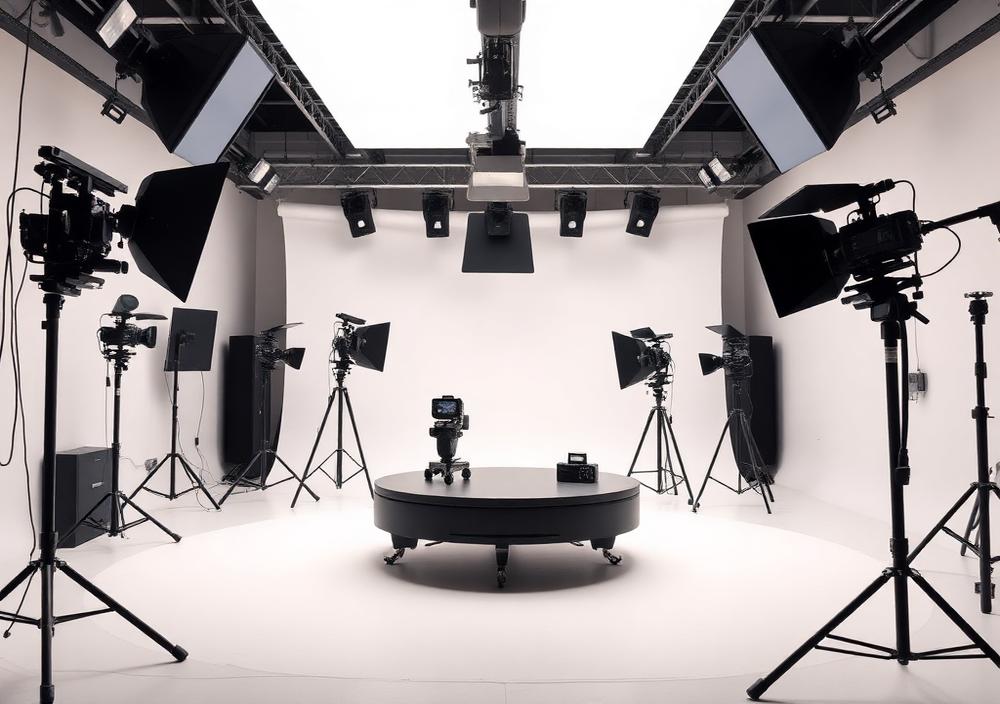
Real Examples: Why These Systems Matter
Scenario 1: The Light Stand Tip
We were mid-shoot on a corporate video day. A team member bumped a light stand while repositioning gear. The stand tipped.
Without sandbags, it would have fallen on a crewmember nearby. With proper sandbag anchoring, the stand shifted a few inches and stopped. No injury. No panic. No loss of time.
One sandbag per stand saved an accident.
Scenario 2: The Cable Hazard
Another shoot, fashion content day. A taped cable corner had shifted slightly. We caught it during our hourly safety check—not when talent was walking through. We re-taped it, verified the walkway was clear, and continued.
Thirty seconds of attention prevented a potential fall.
Scenario 3: The Overloaded Circuit
We had planned a full day with heavy lighting. Initial setup would have pushed one circuit to 95% capacity. Rather than risk overload, we redistributed equipment across two circuits. Added 10 minutes of setup time. Eliminated electrical hazard and fire risk.
These aren’t dramatic stories. They’re the invisible work that keeps shoots running safely.
Full-Day Shoot Considerations
Safety for 8+ hour shoots also includes talent and team wellbeing.
Breaks and positioning. Talent standing or in a specific position for hours risks muscle strain and fatigue. We build in position changes and breaks every 90 minutes. This isn’t soft safety—it’s injury prevention.
Hydration and snacks. A dehydrated team member makes bad decisions. A hungry crew loses focus. We keep water and snacks on set. This isn’t pampering. It’s maintaining alertness and safety.
Team rotation. For long shoots, critical tasks (camera operation, lighting adjustment) rotate between trained team members. Fatigue affects decision-making. Rotation maintains standards.
Clear communication. On a busy set, safety hazards get missed if communication breaks down. We use a clear call system: “Cable in the walkway,” “Moving a light stand,” “Repositioning the boom.” Everyone on set knows hazards are being communicated.
The Responsibility That Builds Trust
For corporate clients planning large-scale shoots, understanding a studio’s safety practices tells you a lot.
A studio that talks safety seriously invests in the right equipment. It prioritizes professional standards. It understands liability. It respects your team.
A studio that dismisses safety as overcautious is one that cuts corners.
When you’re trusting a production team with your team, your talent, and your brand reputation, safety standards matter as much as technical capability. In fact, they’re inseparable. A studio that can’t run safely can’t run professionally.
Studio Safety Isn’t Negotiable
This is how professional studios work. Not because we’re risk-averse. Because we respect the responsibility of managing a complex environment where people work.
When you book a large-scale shoot—a full-day corporate session, a major product launch, a branded content day—you’re trusting us with more than just your photography. You’re trusting us with your team’s safety.
We take that seriously.
Every cable taped. Every light stand sandbag-secured. Every hazard identified. Every team member safe.
That’s not overhead. That’s professionalism.
Ready to Trust GradePixel for Your Large-Scale Projects?
If you’re planning an ambitious shoot—multiple setups, full-day schedule, valuable talent, complex production—safety and professionalism go hand-in-hand.
We’ve managed hundreds of full-day shoots with zero safety incidents. Not because we’re lucky. Because we’ve built systems and discipline into every shoot day.
Trust GradePixel for your large-scale projects. Let’s talk about your vision, your team, and how we approach professional, safe production.

A title
Image Box text
Sylvester Lim - Founder of GradePixel
I’m Sylvester, founder of GradePixel, a commercial photography and video production studio in Singapore with over 10 years of experience. I’ve worked with brands across product, food, fashion, and corporate sectors, helping businesses create clean, effective visuals that drive real results. My focus is always on practical, high-quality production that works for marketing.