Corporate Event Photography Singapore: A Planning Guide
A corporate event — a product launch, an annual conference, a company anniversary, or an award gala — happens once. The room, the energy, the specific configuration of people, speakers, and moments that make up that event will never be exactly replicated. Photography is what allows the event to live on: in press coverage, in [...]
July 1, 2026 • gradepixel
![]()
A corporate event — a product launch, an annual conference, a company anniversary, or an award gala — happens once. The room, the energy, the specific configuration of people, speakers, and moments that make up that event will never be exactly replicated. Photography is what allows the event to live on: in press coverage, in social media posts, in internal newsletters, and in the marketing materials that reference it for years afterward.
This guide covers what corporate event photography involves, the types of events that typically need it, how to brief a photographer effectively, and what to expect in terms of coverage and turnaround.
What Is Corporate Event Photography?
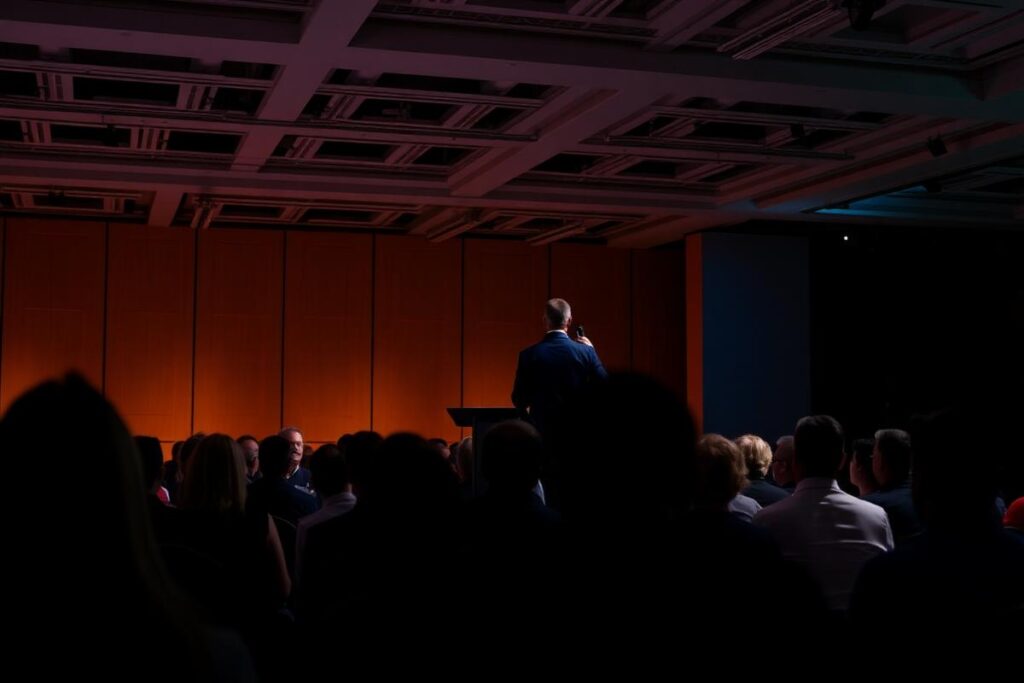
Corporate event photography is the documentation of business events — conferences, product launches, company milestones, galas, and networking events — for use in marketing, press, internal communications, and archival purposes. It combines candid, documentary-style coverage of the event as it unfolds with planned, deliberate shots of key moments, speakers, and VIPs.
The output of corporate event photography typically serves multiple audiences at once: a press release might need a handful of polished, high-impact images within hours; a marketing team might need a broader gallery for social media over the following days; and an internal communications team might want a wider archive documenting the full event for company records.
Types of Corporate Events That Need Photography
Corporate event photography spans a wide range of formats, each with slightly different priorities for coverage.
Conferences and seminars. Coverage typically includes speaker sessions, audience shots, networking breaks, signage and branding, and any panel discussions or breakout sessions.
Product launches and brand activations. The emphasis is often on the product reveal itself, key executive moments, media and influencer attendees, and the overall atmosphere and design of the activation.
Company anniversaries and milestone celebrations. These events often combine formal moments (speeches, cake-cutting, award presentations) with more candid celebration coverage — staff socialising, reactions, and the overall mood of the event.
Award ceremonies and galas. Coverage centres on award presentations, winners and recipients, formal portraits of attendees if requested, and the overall production value of the event (staging, lighting, decor).
Networking events and mixers. Primarily candid coverage — conversations, introductions, and the general energy of the room — with some planned shots of any formal elements like opening remarks.
Office openings and ribbon-cutting ceremonies. Often include formal posed shots of the ribbon-cutting moment itself, executive and VIP portraits, and coverage of the new space.
Town halls and all-hands meetings. Typically lighter coverage focused on leadership presenting, audience engagement, and the overall setting — often for internal communications rather than external press.
What Corporate Event Photography Should Cover
A well-briefed event photography session typically captures several distinct categories of images, each serving a different purpose afterward.
Key moments. Speeches, presentations, ribbon cuttings, award presentations — the scheduled, planned highlights of the event that are likely to be referenced specifically in follow-up communications.
Candid coverage. Networking, conversations between attendees, audience reactions during presentations. These images capture the atmosphere and energy of the event in a way that staged shots cannot.
Branding shots. Event signage, branded backdrops, step-and-repeat banners, and any sponsor or partner branding that needs to be documented for reporting or sponsorship fulfilment purposes.
VIP coverage. Guests of honour, executives, and notable attendees — often needed for press purposes or to acknowledge specific individuals in follow-up communications.
Wide shots. Images of the venue, the size of the crowd, and the overall atmosphere — useful for conveying scale and giving context to the event as a whole.
Detail shots. Decor elements, branded materials, food and beverage presentation if relevant — the kind of detail images that add texture to a recap article or social media gallery.
How to Brief a Corporate Event Photographer
The quality of event coverage depends heavily on how well the photographer understands the event before it starts — there’s no opportunity to reshoot a moment that’s passed.
Share the event run-of-show or agenda in advance. Knowing when speeches happen, when the programme has gaps, and what the overall flow of the day looks like allows the photographer to plan their positioning and anticipate key moments rather than reacting to them as they happen.
Identify VIPs and key people who must be photographed. If there are specific executives, guests of honour, or speakers whose images are essential for the event’s purpose, flag these explicitly. A photographer who doesn’t know who’s important in the room may miss them in a crowd.
Specify any branding requirements. If certain images need to include specific logos, banners, or branded elements — for sponsorship fulfilment or marketing requirements — communicate this before the event, not after.
Confirm how quickly images are needed afterward. If a press release is going out the same day or the next morning, the photographer needs to know this in advance so they can prioritise editing accordingly.
Discuss the venue layout and lighting conditions in advance. Venues with mixed lighting, dark stages, or large spaces benefit from a photographer who has had the chance to think through their approach beforehand — or to do a site visit if the event is significant enough to warrant it.
How Many Photographers Do You Need?
A single photographer is generally suitable for smaller events — under roughly 50 guests, held in a single room or space, with a relatively straightforward agenda.
Multiple photographers become valuable for larger events, events with multiple concurrent sessions or breakout rooms, or events where both formal/planned coverage and candid documentary coverage are needed simultaneously. For example, one photographer might focus on the main stage and speaker sessions while another covers networking areas and candid moments — ensuring neither type of coverage is missed while the other is happening.
Turnaround Time for Event Photography
Standard turnaround typically delivers a curated, edited gallery within a few business days after the event — sufficient for most marketing, social media, and internal communications needs.
Same-day or next-day delivery is often available at a premium for press and PR purposes, where a small selection of polished images needs to support a press release or news coverage that goes out very soon after the event.
Live or on-the-spot sharing can be arranged for some events — a small batch of images shared during or immediately after the event for real-time social media posting, while the full edited gallery follows on the standard timeline.
Corporate Event Photography vs Headshot and Portrait Sessions
Corporate event photography and headshot or portrait sessions serve different purposes and are typically planned separately, though they’re sometimes combined.
Event photography documents what happens — the energy, the moments, the people in context. Headshot and portrait sessions produce controlled, individual images for ongoing professional use, such as LinkedIn profiles or company directories.
→ For a guide to headshot sessions, including what’s involved and how to prepare, see our article on corporate headshot photography in Singapore.
→ If your event includes a significant number of staff or executives, you may also want to plan a separate corporate team photography session — either before or after the event, in a quieter setting better suited to formal group portraits.
Combining Headshots with Event Coverage
It’s sometimes efficient to combine a brief headshot session with event coverage — for example, setting up a simple backdrop near the registration area where executives or speakers can have an individual portrait taken before the main programme begins. This works well for events where a number of people who don’t usually get photographed together are all in the same place at the same time.
If you’re considering this, flag it when briefing your photographer — it requires planning the right space and timing so it doesn’t interfere with the main event coverage.
Booking Corporate Event Photography in Singapore
Pricing for corporate event photography is generally scoped around the event itself — duration, number of photographers required, and turnaround needs — rather than a standard per-person rate as with headshot sessions.
→ For a sense of how photography pricing is generally structured across different corporate photography services, see our guide on corporate headshot pricing in Singapore — while event pricing differs, the factors that influence cost (scope, turnaround, number of photographers) follow similar logic.
→ To discuss your event and request a quote, visit our corporate photography studio in Singapore.
Frequently Asked Questions
How far in advance should I book a corporate event photographer?
For events with a confirmed date, booking several weeks in advance is advisable — particularly for larger events that may require multiple photographers, or events during busy periods (year-end, major industry conference seasons) when photographers’ schedules fill up faster. For smaller or more flexible events, shorter notice can often still be accommodated, but earlier booking gives the photographer more time to understand the event and plan accordingly.
How many photos will we receive from an event?
This depends on the length of the event, the number of photographers, and the scope of coverage agreed in the brief. A full-day conference with comprehensive coverage will naturally produce a larger gallery than a two-hour networking event. The deliverable is typically a curated, edited selection rather than every frame captured — your photographer can advise on a realistic range based on your event’s specifics.
Can the photographer also capture a few headshots during the event?
Yes, this can often be arranged, particularly if there’s a quieter space available — such as near registration, before the main programme starts. It works best when planned in advance so the photographer can allocate time and set up appropriately without it interfering with main event coverage. For a larger number of headshots, or a more controlled result, a separate dedicated headshot session is usually preferable.
GradePixel is a corporate photography studio in Singapore. We provide corporate event coverage, headshots, and team photography for businesses across Singapore. Contact us to discuss your event.
A title
Image Box text
Sylvester Lim - Founder of GradePixel
I’m Sylvester, founder of GradePixel, a commercial photography and video production studio in Singapore with over 10 years of experience. I’ve worked with brands across product, food, fashion, and corporate sectors, helping businesses create clean, effective visuals that drive real results. My focus is always on practical, high-quality production that works for marketing.