
Ecommerce Fashion Photography Singapore: A Brand’s Guide
Everything fashion brands in Singapore need to know about ecommerce photography — platform requirements, activewear, catalogue shoots, and how to choose the right studio
June 11, 2026 • gradepixel
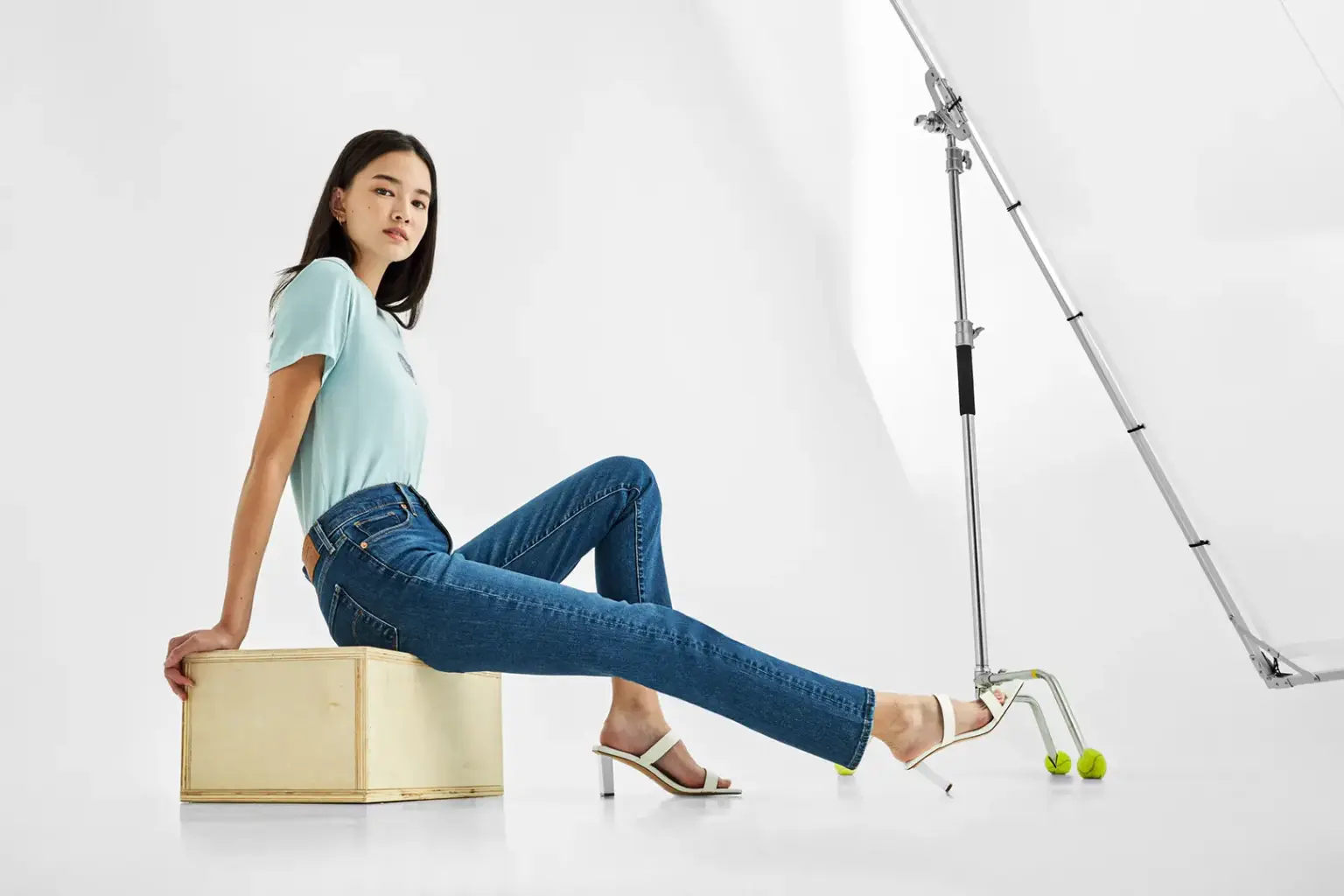
Ecommerce Fashion Photography in Singapore: A Brand’s Guide
Singapore’s fashion ecommerce market is competitive. Shopee, Zalora, and Lazada list thousands of clothing brands on the same screens, sorted by algorithms that factor in image quality alongside price and reviews. Before a buyer reads your product description, checks your rating, or compares your price, they see your listing image. That image — and whether it gives them enough confidence to click — is the first commercial decision your photography makes.
This guide covers what fashion brands in Singapore need to know about ecommerce photography: platform requirements, the different shoot types available, how activewear photography differs from standard catalogue work, and what to look for when choosing a studio.
What Is Ecommerce Fashion Photography?
Ecommerce fashion photography produces a structured set of commercial images for each garment or fashion product in a catalogue — specifically optimised for online selling platforms. Unlike lookbook or editorial photography, ecommerce photography prioritises clarity, consistency, and platform compliance over creative direction.
The output is functional rather than expressive. Every image serves a specific purpose: the main listing image communicates what the garment is, the back view answers questions about fit and construction, the detail shot shows fabric quality, the lifestyle image provides context. A complete ecommerce image set per garment is not about producing one standout image — it is about producing an information system that removes buyer uncertainty at every decision point.
Platform Requirements for Fashion Ecommerce in Singapore
Each platform has its own image specifications. Meeting them in production — rather than fixing non-compliant images in post — is the most efficient approach.
Shopee and Lazada
Shopee and Lazada are Singapore’s highest-volume fashion ecommerce platforms, and their visual standards reflect a volume-driven marketplace environment.
- Main image format: Square (1:1), white or very light neutral background
- Product fill: The garment should occupy the majority of the frame — avoid excessive background space around a small garment
- Resolution: Minimum 500x500px, but 2000px+ strongly recommended for zoom functionality
- Image set per listing: 4–8 images recommended. Front view, back view, detail shot, and at least one lifestyle or context image consistently outperform listings with single images
- Tone: Bright, clean, and high-contrast images outperform moody or dark-background shots in the Shopee and Lazada listing environment, where images display small alongside many competitors
Zalora
Zalora applies a stricter visual standard than Shopee or Lazada, which reflects its positioning as a fashion-focused platform.
- Resolution: Minimum 800x800px; 1600px+ recommended
- Model preference: On-model photography is strongly preferred for apparel. Ghost mannequin images are accepted but on-model is the standard for full garment listings
- Background: Consistent white or off-white background across all listings. Zalora’s algorithm favours visual consistency within a seller’s catalogue
- Image angles: Front, back, side, and at least one detail shot per SKU is expected for full catalogue listings
Brand Website (Shopify, WooCommerce, Custom)
Your own brand website gives you the most flexibility, but visual consistency across the full catalogue is still the primary quality signal.
- Resolution: 2000px on the shortest side for zoom-enabled product pages
- Image mix: White background catalogue images for product pages; lifestyle and lookbook imagery for collection pages, homepage, and campaign placements
- Set per product: Front + back + one detail + one lifestyle image per SKU is the well-optimised standard for a brand website product page
- Consistency: Every garment should feel like it was shot in the same session, regardless of when it was actually produced
Types of Ecommerce Fashion Photography Shoots
Not all ecommerce photography uses the same approach. The right shoot type depends on your garment category, your budget, and your platform priorities.
On-Model Studio Catalogue
The most common format for fashion ecommerce. A fit model shoots each garment in studio on a white or neutral background, covering front view, back view, and any additional angles specified in the shot list.
On-model catalogue photography is the most effective way to communicate garment fit and how a piece of clothing actually looks on a body. It requires a model booking, but produces images that perform well across all platforms — Shopee, Zalora, and brand websites alike. For a catalogue with 20–60 looks, on-model studio shooting is the most efficient, scalable format.
Ghost Mannequin (Invisible Mannequin)
Garments are shot on a physical mannequin, and the mannequin is removed in post-production — leaving a three-dimensional, wearable-looking garment image without a visible model or mannequin.
Ghost mannequin photography significantly reduces the per-SKU cost for large-volume catalogues by removing the model booking fee. It performs particularly well for structured garments — outerwear, jackets, structured dresses, and trousers — where the garment holds its shape on a mannequin and communicates fit clearly without a body inside it.
→ For a complete guide to how ghost mannequin works, see our article on ghost mannequin photography Singapore.
Flat Lay Photography
The garment is laid flat on a surface and photographed from directly above. Flat lay is efficient, low-cost, and works well for accessories, folded items, knitwear, and brands with a specific flat lay visual aesthetic that resonates on social media.
Its limitation: flat lay images communicate very little about garment fit or how a piece looks when worn. For any garment where fit is a purchase decision factor — which is most apparel — flat lay is less effective than on-model or ghost mannequin as a primary listing format.
Lifestyle On-Model
The model is shot in a styled environment — a street, a studio set, an outdoor location — rather than against a plain background. Lifestyle images are effective for secondary listing slots, social media content, and brand website placement. They communicate brand identity and product context in a way that clean background catalogue shots cannot.
The most effective approach for most fashion ecommerce brands: white background or ghost mannequin images for the primary listing slot, lifestyle images for secondary slots and social media.
Activewear and Sportswear Photography
Activewear photography is a distinct category within fashion ecommerce — and one that requires a different brief, different model casting, and different shooting approach from standard clothing catalogue work.
Showing performance, not just product. Activewear garments need to show how they move. A static, standing-pose image of a compression legging communicates very little about how the fabric performs, how the fit holds during movement, or whether the product is genuinely technical. Models in active positions — lunging, mid-stride, reaching overhead — communicate the garment’s performance intent directly.
Technical fabric requires directional lighting. Moisture-wicking fabrics, compression materials, and four-way stretch panels have specific visual properties that only become apparent under directional, slightly harder light than the soft wrapping light used for standard fashion catalogue work. The lighting brief for activewear photography should specify how technical fabric properties will be communicated, not just how the model will be lit.
Brand context matters more in activewear. A gym studio setting communicates performance. An outdoor trail communicates endurance. A lifestyle café setting communicates athleisure. The location or set choice for an activewear shoot is a positioning decision, not just an aesthetic one.
Casting for activewear is different. Activewear photography requires models who can perform physical movements naturally and repeatedly, hold active positions without tension, and communicate physical confidence in a way that resonates with the brand’s target buyer. A model who photographs well in standing poses for womenswear may not be the right cast for a technical sportswear brand.
GradePixel regularly shoots activewear and performance fashion for sports and performance brands. The brief, casting, and shooting approach differ from standard fashion catalogue work — treat activewear as a separate shoot type from the outset, not a variation on a standard catalogue session.
How to Prepare for an Ecommerce Fashion Shoot
Preparation on the brand side directly determines how efficiently the shoot runs and how much you get out of the session.
Steam or iron every garment immediately before the shoot. Creases that are barely visible on a hanger become sharp and obvious in a photograph. This applies even to fabrics that look smooth — linen, cotton, and many synthetic blends wrinkle during transit and storage.
Build a complete shot list before booking. Every SKU, every view required, every special angle or detail shot. Changes to the shot list on the day — adding SKUs, changing views, accommodating garments that were forgotten — consume time that was budgeted for shooting.
Group garments by model size. If your catalogue spans multiple fit sizes, grouping garments by size before the shoot day avoids repeated sizing changes during the session.
Bring backup garments for hero SKUs. Garments get handled repeatedly during a shoot. Buttons snag, fabric marks, and accessories scratch surfaces. Having a second unit of your most important pieces ensures the session can continue if the primary garment is damaged.
Confirm platform destination before the shoot. Different platforms require different file formats, resolutions, and aspect ratios. Confirming the intended platforms before the shoot day means files can be exported in the correct specifications at delivery, without a second round of reformatting.
Choosing an Ecommerce Fashion Photography Studio in Singapore
Beyond reviewing a portfolio, these are the questions that determine whether a studio is the right fit for your catalogue.
Experience with your garment category. Activewear, structured womenswear, kidswear, accessories, and lingerie all have different shooting requirements. A studio experienced in one category may not be set up for another. Ask to see sample work from your specific garment type.
Capacity per day. Ask how many looks the studio can reliably complete in a half-day and full-day session. The answer varies significantly based on the studio’s lighting setup, their approach to set changes, and whether they have a dedicated stylist managing looks between shots.
Ghost mannequin availability. Not all studios offer ghost mannequin photography as a standard service. If your catalogue includes garments that would benefit from the ghost mannequin approach, confirm capability before booking.
Post-production turnaround for large batches. A full catalogue shoot produces a large number of files. Understanding the studio’s standard turnaround for editing and delivery — and whether express options are available for launch deadlines — matters as much as the shooting quality.
Colour consistency across sessions. If you plan to shoot across multiple sessions, verify that the studio has a system for maintaining consistent colour grading from one session to the next. Inconsistency across catalogue batches is one of the most common quality problems in high-volume fashion ecommerce photography.
→ To discuss your ecommerce fashion photography requirements, visit our fashion photography studio in Singapore.
Ecommerce Fashion Photography Pricing in Singapore
Pricing varies by shoot type, session length, and what post-production is included. For a full breakdown of what each approach typically costs and what to look for when comparing quotes, see our guide on fashion photography pricing in Singapore.
Frequently Asked Questions
How many looks can be shot in a day for ecommerce fashion?
For a standard on-model studio catalogue with front and back views per look, a full day typically covers 40–80 looks depending on the garment complexity and how many views are required per SKU. Simple garments with a clean front/back brief can reach the higher end of this range. Garments with complex detailing, multiple accessories, or ghost mannequin compositing requirement will come in at the lower end.
Do I need a model for ecommerce fashion photography?
Not necessarily. Ghost mannequin photography produces strong results for structured garments — outerwear, jackets, structured dresses, and bottoms — without a model. Flat lay works for accessories and folded items. On-model photography produces the most commercially effective images for most apparel categories, particularly for brands positioning above the entry level or selling on Zalora where on-model is the standard.
What is the difference between catalogue photography and lookbook photography?
Catalogue photography prioritises clarity, consistency, and platform compliance — it shows what a garment looks like accurately and efficiently. Lookbook photography prioritises brand storytelling and aesthetic cohesion — it communicates what the brand’s identity is and how the collection fits into a seasonal or lifestyle context. Catalogue images sell the individual garment; lookbook images sell the brand.
Can ghost mannequin replace model photography for all garment types?
No. Ghost mannequin works well for structured garments that hold their shape on a mannequin. It is less effective for soft, unstructured garments that drape and flow with body movement — jersey knits, silk, satin, and other fluid fabrics lose their character without a body to give them shape. Activewear is also better served by on-model photography because the performance context requires movement that a mannequin cannot demonstrate.
GradePixel is a fashion photography studio in Singapore. We produce ecommerce catalogues, activewear photography, and ghost mannequin shoots for fashion brands. Contact us to discuss your project.
A title
Image Box text
Sylvester Lim - Founder of GradePixel
I’m Sylvester, founder of GradePixel, a commercial photography and video production studio in Singapore with over 10 years of experience. I’ve worked with brands across product, food, fashion, and corporate sectors, helping businesses create clean, effective visuals that drive real results. My focus is always on practical, high-quality production that works for marketing.