
AI Virtual Try-On for Fashion Brands: What It Is and How It Works
AI virtual try-on is becoming a mainstream expectation in online fashion retail — the ability for a buyer to see how a garment looks on a body without a model shoot, without a physical fitting room, and without receiving the product. For fashion brands managing large catalogues across multiple markets, the commercial proposition is significant: [...]
July 4, 2026 • gradepixel
AI virtual try-on is becoming a mainstream expectation in online fashion retail — the ability for a buyer to see how a garment looks on a body without a model shoot, without a physical fitting room, and without receiving the product. For fashion brands managing large catalogues across multiple markets, the commercial proposition is significant: show every SKU on multiple body types and demographic representations without the cost of booking a separate model shoot for each variation.
This guide covers what virtual try-on technology actually is, how it works technically, where it delivers genuine commercial value, where it consistently falls short, and — critically — why the quality of the source product image determines the quality of the virtual try-on output more than the tool itself.
What Is AI Virtual Try-On?
AI virtual try-on is technology that digitally overlays a garment onto an image of a model or a buyer’s own photo — simulating how clothing would look when worn, without requiring a physical fitting or a model shoot for each garment. Fashion ecommerce brands use it to show size and fit variations, expand demographic representation across body types and skin tones, and generate content variation from a single product image at a cost significantly below traditional model photography.
The technology operates across two main use cases: brand-side content generation (producing model images the brand uses in listings and marketing) and buyer-facing interactive tools (allowing shoppers to upload their own photo and see how a garment might look on them specifically). This guide focuses primarily on the brand-side content generation case, which is more commercially mature and more widely adopted.
How AI Virtual Try-On Works
The process involves four sequential stages, each dependent on the quality of what comes before it.
Stage 1 — Garment segmentation. The AI analyses the input product image and segments the garment from its background — identifying the garment’s shape, boundaries, colour, and surface texture. This stage requires a clean, well-isolated product image to work accurately. Poor source image quality at this stage cascades through every subsequent stage.
Stage 2 — Body mapping. The AI maps the target model’s body proportions — from either a real model photograph or a synthetic AI-generated model figure — calculating where the garment’s seams, hems, and edges will fall on that body, and how fabric of that type would distribute across those proportions.
Stage 3 — Rendering. The garment is computationally draped onto the mapped body contours, with adjustments for lighting direction, shadow behaviour, and an approximation of how the fabric type would drape, fold, and move in that body position. This is the technically most complex stage and the most significant source of quality variation across tools.
Stage 4 — Output and quality review. The composite image is generated and reviewed for visual artefacts, misalignment at garment edges, and accuracy of fabric behaviour. Most professional implementations include human review at this stage — particularly for complex garments or edge body proportions where AI rendering produces unreliable results.
Leading AI Virtual Try-On Tools
Botika places existing garment product images onto AI-generated diverse model figures in multiple poses and body types. Allows brands to expand size and demographic representation from a single studio product shot without booking multiple model types. Best for: standard woven garments and structured pieces. Less reliable for knits, sheers, and heavily textured fabrics where texture accuracy is critical.
Zyler generates model images from flat product photographs or ghost mannequin images. Used primarily for brand website and catalogue content. Best for: structured, tailored garments where shape is clearly defined in the source image. Less effective for soft, draped jersey fabrics where shape depends on body movement.
Fashn.ai uses newer diffusion model architecture, producing more realistic fabric rendering for complex garments — but requires higher quality source images to perform well. The technology improvement is real; the dependency on input quality is equally real.
Zalando’s Fashionista and similar enterprise tools are primarily integrated into major retailer workflows rather than available as standalone services. The commercial case at scale is established; the accessibility for smaller brands is improving.
Where AI Virtual Try-On Delivers Genuine Commercial Value
Size and demographic representation. The highest-value case for virtual try-on in fashion ecommerce. A brand that photographs a garment on a size 10 model and uses virtual try-on to generate the size 14 and size 18 versions expands its representation significantly without tripling the model shoot cost. Brands that have implemented this report improved conversion from underrepresented size groups who previously had no equivalent reference in listings.
Catalogue scale from limited shoots. For fashion brands launching 200+ SKUs per season, shooting every garment on multiple models in multiple poses is prohibitively expensive. Virtual try-on allows a brand to generate a wider range of model images from a single studio session — covering more body types and more contextual poses than the shoot itself could produce.
Speed to market. Virtual try-on from a product image is faster than booking, scheduling, and executing a full model shoot. For brands where early-season listing velocity affects revenue — getting images up on Shopee and Zalora faster — this time advantage has measurable commercial impact.
Where AI Virtual Try-On Consistently Falls Short
Fabric behaviour accuracy for draped and jersey fabrics. The way a jersey knit dress stretches across a body, a silk blouse drapes at the shoulder, or an activewear piece compresses under movement cannot be reliably simulated from a static flat product image. Virtual try-on approximates fabric behaviour based on garment type classification — the approximation works acceptably for structured pieces and fails noticeably for fluid, stretch, and performance fabrics.
Returns reduction is not guaranteed. The assumption that virtual try-on decreases returns because buyers have better visual size information is not consistently supported by current retail data. Buyers who return garments cite fit, feel, and quality expectations as the primary drivers — all of which are experiences that virtual try-on improves only partially. The visual expectation is better addressed; the tactile and sizing expectation gap remains.
Luxury and premium brand positioning. Brands with significant equity in the authenticity and production quality of their imagery typically find that AI-generated model images sit below the visual standard their brand has established. For mass-market and mid-market fashion, the quality ceiling of current virtual try-on is acceptable. For luxury positioning, it is generally not.
Why Source Image Quality Determines Output Quality
Virtual try-on tools are output amplifiers — the quality ceiling of their output is determined by the quality of the input. A low-resolution, poorly lit, or badly isolated product image produces noticeably lower-quality virtual try-on output than a well-produced studio image regardless of which tool is used.
The specific source image requirements that matter most:
Background isolation. A clean background — pure white or the cleanest ghost mannequin extraction — allows the garment segmentation stage to work accurately. Mixed or complex backgrounds introduce segmentation errors that propagate through the rendering.
Colour accuracy. Virtual try-on tools reproduce the colour of the source garment image, not the physical garment. A source image with colour drift — white balance issues, over-saturation, inaccurate hue — produces virtual try-on output that misrepresents the actual colour as compoundingly as the source does.
Texture sharpness. Fabric texture detail visible in the source image provides the rendering stage with material property information. High-resolution, sharp source images produce noticeably better fabric rendering than compressed or low-resolution inputs.
This is why professional studio photography and virtual try-on are complementary rather than competing tools — the studio shoot produces the accurate, high-quality source image that virtual try-on tools perform at their best from.
→ For ecommerce fashion photography that produces the source images virtual try-on tools perform best with, see our article on ecommerce fashion photography Singapore.
→ Ghost mannequin photography in particular provides clean, well-isolated garment images suited to virtual try-on input requirements — see our guide on ghost mannequin photography Singapore.
→ For a broader overview of how AI tools are being integrated into fashion photography workflows, see our article on AI tools in fashion photography.
→ To discuss ecommerce fashion photography for virtual try-on applications, visit our fashion photography studio Singapore.
Frequently Asked Questions
Does AI virtual try-on reduce fashion ecommerce returns?
The evidence is mixed. Virtual try-on improves the visual size reference available to buyers — particularly for size representation across body types — which addresses one component of the return driver. However, returns are also driven by tactile expectations (how fabric feels), actual fit versus perceived fit, and quality expectations from the overall listing impression. Virtual try-on addresses the visual dimension; the other return drivers remain. Brands that have implemented virtual try-on report improvements in conversion from underrepresented size groups but not always a significant reduction in overall return rate.
Which garment types work best with AI virtual try-on?
Structured, woven garments with defined shapes perform best — blazers, trousers, structured dresses, and formal shirts where the garment holds its shape in a product image accurately enough for the rendering stage to work with. Jersey knits, draped fabrics, sheer materials, activewear, and lingerie are consistently more challenging — the fabric behaviour approximation in the rendering stage is less accurate for materials that depend significantly on body contact and movement to reveal their character.
What source image format does AI virtual try-on require?
Most virtual try-on tools perform best with: a white or neutral background (or clean ghost mannequin extraction), minimum 1000×1000px resolution (2000px+ recommended for best quality), the full garment clearly visible without cropping, and accurate colour representation. Ghost mannequin images and clean flat lay images with background removal are both compatible with most tools, though ghost mannequin images typically produce better results for garments with significant three-dimensional structure.
GradePixel is a fashion photography studio in Singapore. We produce ecommerce fashion photography and ghost mannequin images that serve as high-quality source inputs for virtual try-on tools. Get in touch to discuss your project.
A title
Image Box text
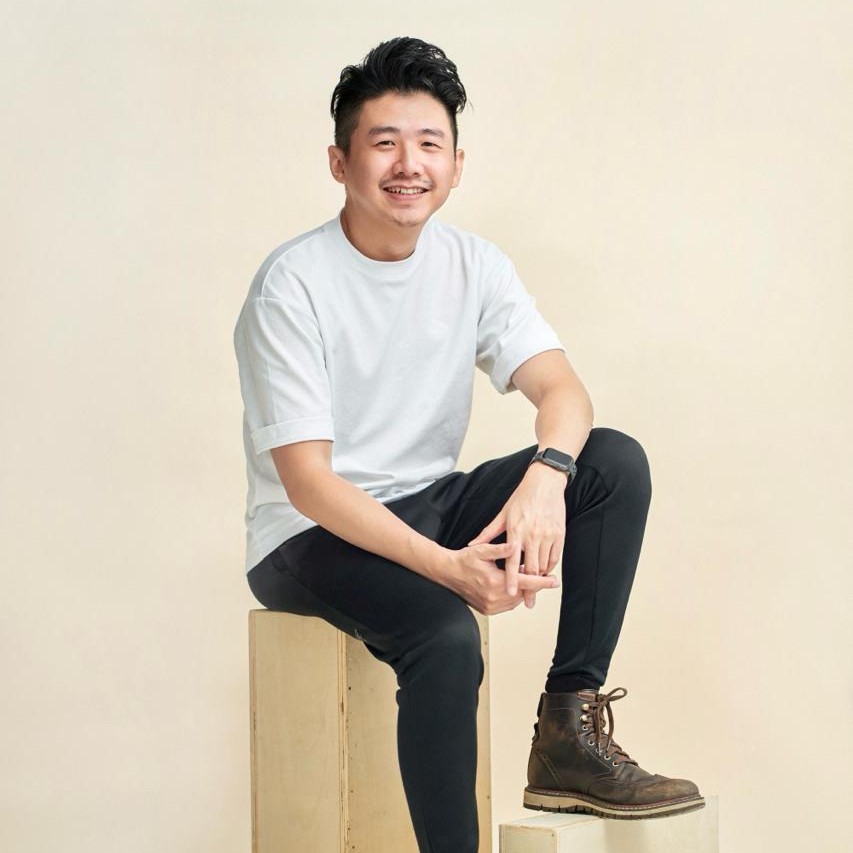
Sylvester Lim - Founder of GradePixel
I’m Sylvester, founder of GradePixel, a commercial photography and video production studio in Singapore with over 10 years of experience. I’ve worked with brands across product, food, fashion, and corporate sectors, helping businesses create clean, effective visuals that drive real results. My focus is always on practical, high-quality production that works for marketing.