
How to Choose an AI Photography Service in Singapore (2026 Guide)
The number of companies in Singapore positioning themselves as AI photography providers has grown sharply — and the range of what they actually deliver spans from sophisticated hybrid studio workflows that use AI at every stage of post-production, to basic background replacement tools sold as a managed service. Choosing without a framework produces poor outcomes [...]
July 5, 2026 • gradepixel
The number of companies in Singapore positioning themselves as AI photography providers has grown sharply — and the range of what they actually deliver spans from sophisticated hybrid studio workflows that use AI at every stage of post-production, to basic background replacement tools sold as a managed service.
Choosing without a framework produces poor outcomes in one of two directions: paying for a service that can’t deliver the accuracy your ecommerce listings require, or dismissing AI tools that could genuinely improve your content production efficiency. This guide gives you the six criteria that separate providers who deliver commercial value from those who deliver attractive demos.
The 6 Criteria That Separate Strong AI Photography Providers
Criterion 1: They Can Show Portfolio Work from Your Specific Product Category
General portfolio quality tells you nothing about category-specific capability. AI tools and studio techniques require significantly different setups for jewellery versus skincare versus structured apparel versus FMCG packaging. A provider who produces excellent results for lifestyle consumer goods may not have the equipment, expertise, or trained models to produce accurate results for reflective jewellery or texture-sensitive premium packaging.
What to do: Ask specifically for three to five portfolio examples from your product category. If the provider cannot show these — or if they redirect to their strongest generic outputs — treat this as a capability gap.
Criterion 2: They Are Transparent About What “AI” Means in Their Workflow
The best providers can explain in plain terms: what is the source material the AI generates from, what specific tools are used and at which stage of production, and where human expertise is applied. This transparency isn’t just good communication — it tells you whether the provider actually understands their own workflow well enough to control quality and troubleshoot problems.
What to do: Ask: “Walk me through where exactly AI is used in producing my images, and what the source material is at each stage.” A provider who can’t answer this clearly doesn’t have the process control to deliver consistent quality.
Criterion 3: They Have a Defined Position on Platform Compliance
Ask directly which image slots their output is appropriate for: primary listing images on Shopee, Lazada, and Amazon, or secondary content only. A strong provider will give you a direct answer — acknowledging that platform-compliant primary listing images require the actual product to be photographed, and that AI-generated imagery is most appropriate for secondary slots and non-listing content.
A provider who claims all AI-generated images are compliant for all platforms without qualification is either unaware of platform requirements or is overstating their service’s suitability.
What to do: State your specific platforms and ask specifically which image slots their output can occupy. If the provider can’t distinguish between primary and secondary listing requirements, they’re not familiar enough with ecommerce platform standards to be trusted with compliance-sensitive work.
Criterion 4: They Have a Defined Quality Control Process
AI output requires human review. Colour accuracy against the physical product, artefact detection, unnatural texture rendering, and platform compliance checking all require judgment that AI cannot apply to its own output. Ask how this review happens: who does it, what they’re checking for, how long it takes, and whether it’s included in the scope or your responsibility.
What to do: Ask: “What’s your quality control process, and whose responsibility is it?” If the provider doesn’t have a clear process, or describes QC as part of your team’s responsibility, add the real cost of that review time into your comparison.
Criterion 5: They Can Explain the Full Cost Including Downstream Risks
Base rate comparisons between AI photography and studio photography are often misleading because they omit the costs that appear elsewhere. Quality control time, re-generation iterations, platform rejection handling, and the commercial cost of inaccurate imagery — returns, negative reviews, listing suppression — are real costs that don’t appear in a photography quote but are directly caused by photography decisions.
What to do: Ask: “What happens if an image doesn’t accurately represent the product after delivery?” and “Is re-generation or revision included?” The answers reveal how the true cost is distributed between the provider and your team.
Criterion 6: They Have Physical Studio Infrastructure, Not Just Software
The most commercially effective AI photography workflows use a real studio — professional camera equipment, controlled lighting, a physical space where products are accurately photographed — as the foundation that AI tools then work from. A provider whose entire operation is a set of AI software subscriptions cannot produce the foundational image accuracy that makes AI content multiplication valuable.
What to do: Ask whether they have a physical studio, and ask to see examples of their studio photography alongside their AI-generated outputs. The relationship between the two tells you what kind of provider you’re dealing with.
A Decision Framework by Use Case
Different use cases require different things from a provider. Use this table to match your primary need to the criteria that matter most.
| Primary Use Case | Most Critical Criteria |
|---|---|
| Platform-compliant listing images (Shopee, Lazada, Amazon) | Criterion 3 (platform compliance) + Criterion 6 (physical studio) |
| Social media content variation | Criterion 1 (category portfolio) + Criterion 4 (QC process) |
| Seasonal background updates | Criterion 2 (workflow transparency) + Criterion 5 (full cost) |
| Brand campaign images | Criterion 6 (physical studio) + Criterion 1 (category portfolio) |
| Size and demographic representation | Criterion 1 (category portfolio) + Criterion 4 (QC process) |
| AI-assisted retouching at volume | Criterion 4 (QC process) + Criterion 5 (full cost) |
The Questions to Ask Every Provider
Use this checklist before signing with any AI photography provider in Singapore.
- Show me portfolio examples from [my product category] specifically — not your general showcase.
- What is the source material for your AI generation — a studio shoot of the physical product, a product render, or a text prompt?
- Are your outputs compliant for primary listing images on Shopee, Lazada, and Amazon — specifically the main image slot?
- Who reviews the output for quality and accuracy, and what does that process involve?
- What’s your revision or re-generation policy when an output doesn’t accurately represent the product?
- What does the total cost include — are QC time, format adaptation, and revision rounds included?
- Do you have a physical studio, and what role does it play in producing the source images?
A provider who answers all seven questions clearly and specifically has the process maturity to be a reliable partner. A provider who deflects, qualifies heavily, or gives vague answers to more than two of these is asking you to absorb production risk on their behalf.
What Best-Practice AI Photography Looks Like in Practice
A provider that meets all six criteria will typically:
- Operate a professional photography studio where physical products are photographed accurately before AI tools are applied
- Use AI for the tasks it does best — variation generation, format adaptation, post-production efficiency — rather than as a substitute for accurate product photography
- Be clear about which output is appropriate for which platform and image slot
- Include quality-reviewed deliverables in scope rather than raw AI output the client must review
- Have the category portfolio to demonstrate performance across different product types
GradePixel’s studio operates on this model. A 3,200 sq ft professional photography studio in Singapore produces foundational product images for brands including L’Oréal, Sephora, Nestlé, and Singapore Airlines — images that then serve as the source material for AI-assisted content multiplication, format adaptation, and post-production acceleration. The AI component adds efficiency and content scale; the studio component provides the accuracy that makes the AI output commercially usable.
→ For a full explanation of how a hybrid AI and studio workflow operates, see our article on what a hybrid AI and studio workflow looks like.
→ For a comparison of AI-only and studio photography on cost, quality, and compliance, see our article on AI vs traditional product photography.
→ For a breakdown of how AI photography is priced in Singapore across different service types, see our guide on AI photography pricing in Singapore.
→ To discuss your requirements, visit our product photography studio in Singapore.
Frequently Asked Questions
How do I know if an AI photography service is right for my brand?
Start by defining what the images will be used for. If you need platform-compliant primary listing images for Shopee, Lazada, or Amazon, you need a provider with a physical studio and a clear platform compliance position. If you need secondary content — lifestyle variations, seasonal backgrounds, social media — AI-only services can add value at lower cost. The mismatch happens when brands commission AI-only services for primary listing image use cases and discover the compliance and accuracy problems after delivery.
Are there AI photography services in Singapore that include a studio shoot?
Yes — a hybrid model where a studio shoot produces accurate source images and AI tools then generate content variations from those images is offered by studios with both physical infrastructure and AI workflow capability. This is meaningfully different from AI-only services that generate from prompts or renders. When evaluating providers, confirm specifically whether a studio shoot of the physical product is included before comparing prices.
What should I ask an AI photography provider before signing a contract?
The seven questions in this guide are the ones that matter most: category-specific portfolio, source material transparency, platform compliance specifics, quality control process, revision policy, total cost disclosure, and physical studio confirmation. A provider who answers all seven clearly has the process maturity and transparency to be a reliable partner. Proceed with caution toward any provider who deflects or qualifies heavily on more than two of these.
GradePixel is a product photography studio in Singapore operating a hybrid studio and AI workflow for brands across Singapore. Contact us to discuss your requirements.
A title
Image Box text
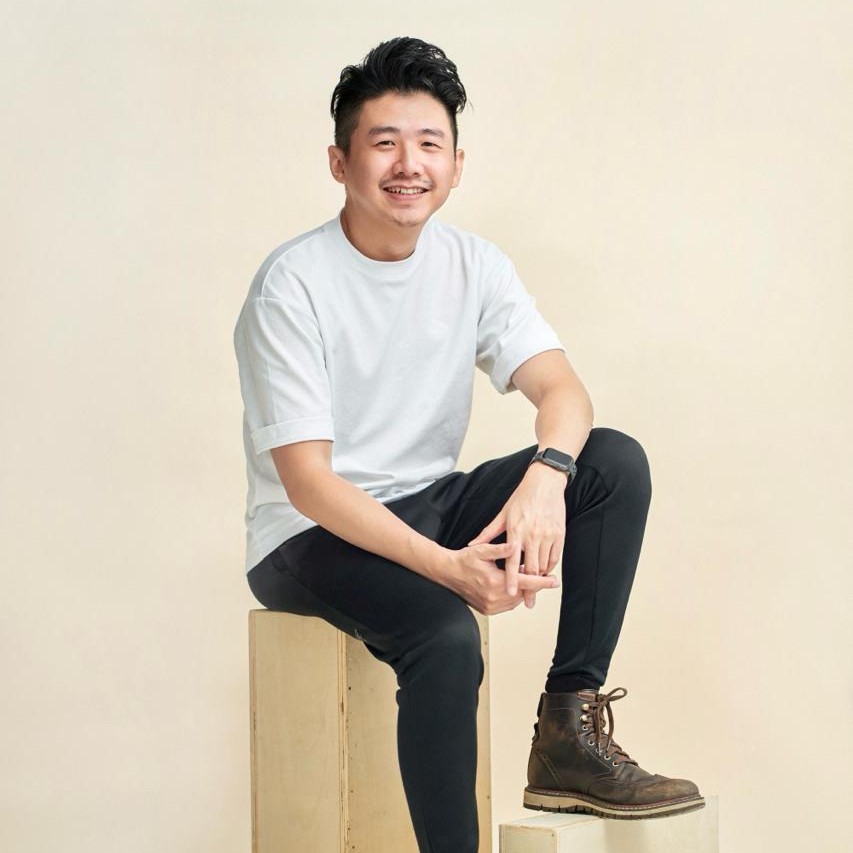
Sylvester Lim - Founder of GradePixel
I’m Sylvester, founder of GradePixel, a commercial photography and video production studio in Singapore with over 10 years of experience. I’ve worked with brands across product, food, fashion, and corporate sectors, helping businesses create clean, effective visuals that drive real results. My focus is always on practical, high-quality production that works for marketing.