
AI vs Traditional Product Photography: Cost, Quality & When to Use Each
AI vs traditional product photography compares generative AI image tools against studio photography across accuracy, cost, platform compliance, brand control, scalability, and quality accountability. The two approaches are not substitutes — they serve different roles in a commercial content workflow, and understanding where each one belongs prevents both over-investment and underuse. What Each Approach Actually [...]
July 3, 2026 • gradepixel
AI vs traditional product photography compares generative AI image tools against studio photography across accuracy, cost, platform compliance, brand control, scalability, and quality accountability. The two approaches are not substitutes — they serve different roles in a commercial content workflow, and understanding where each one belongs prevents both over-investment and underuse.
What Each Approach Actually Produces
AI product photography generates or significantly modifies product images using generative AI models. This includes placing an existing product photo into an AI-generated background, removing and replacing backgrounds at scale, generating lifestyle scene variations from a single source image, and applying AI-assisted retouching to conventionally shot images. The key characteristic: AI product photography produces images at speed and scale, with variable accuracy depending on the specific application and the quality of the source material.
Traditional studio photography captures the physical product under controlled lighting conditions with a camera operated by a photographer making deliberate decisions about every variable — the light source, the angle, the styling, the post-production treatment. The output accurately represents the actual product, with creative direction determined by the brief and quality reviewed before delivery. The key characteristic: studio photography produces accurate, brand-directed images at a per-image cost that decreases meaningfully with volume.
The conversation about these two approaches is often framed as a binary choice — AI or studio. That framing is wrong, and brands that fall into it make poor budget decisions in both directions: dismissing AI tools that could improve content production efficiency, or over-investing in AI-generated imagery that creates downstream problems with accuracy, platform compliance, and brand trust. The right question is not which one wins, but which one belongs in which role.
Eight Dimensions That Actually Determine the Right Tool
Cost and speed are the two factors that dominate most comparisons between AI and studio photography — but they are not the only factors that determine which approach delivers better commercial value. Across eight dimensions, the picture becomes clearer.
Image Accuracy
AI photography generates plausible representations of a product. The AI model has not seen the physical product — it produces what a product of that type typically looks like, based on training data. Colour, texture, and material accuracy vary depending on how closely the AI’s training matches the specific product. For premium materials, complex packaging, and products where finish quality is the selling point, the approximation is often visible. Studio photography captures the actual physical product under controlled conditions. Accuracy is determined by the quality of the lighting, calibration, and post-production — all of which are manageable and verifiable before delivery.
Speed to Delivery
AI wins on raw speed. Background replacement takes seconds; lifestyle environment generation takes minutes; a full batch of secondary image variants can be produced in an hour. Studio photography requires scheduling, setup, shooting time, and post-production — from booking to delivery typically runs three to seven business days depending on scope. The comparison changes when quality control time is factored into the AI timeline. Every AI-generated image requires human review before use, and iteration cycles to address accuracy problems add time that isn’t part of the initial speed calculation.
True Cost Comparison
The per-image cost of AI-generated product images is extremely low at scale — most AI tools run as monthly subscriptions regardless of output volume. But that pricing excludes three real costs: the source image, which most professional AI applications still require; quality control time, where every output needs human review for colour accuracy, artefacts, and platform compliance before publication; and the cost of inaccuracy, which appears downstream as returns, negative reviews, and marketplace listing suppression rather than in the photography budget. Studio photography has a higher per-image cost for small batches, decreasing significantly at volume, with no ongoing subscription and quality accountability built into the engagement.
Platform Compliance
Fully AI-generated primary listing images carry compliance risk on all three major platforms in Singapore. Amazon’s main image guidelines require that images accurately represent the physical product. Shopee and Lazada have equivalent standards for listing main ecommerce product photography images. AI images that don’t correspond to the actual product risk rejection, listing suppression, or the negative review patterns that damage ranking over time. Studio photography is platform-compliant by design — the image is of the actual physical product, lit and presented accurately. For primary listing images, this is not a preference; it is a platform requirement that affects commercial viability.
Brand Control and Creative Direction
Creative direction in an AI workflow is communicated through text prompts and reference images. Maintaining a distinctive brand aesthetic consistently across AI-generated content is genuinely difficult — AI generation tends toward plausible-but-generic output rather than brand-specific visual language. A studio shoot gives full creative control: every variable in the image is a deliberate decision — lighting style, background design, colour grading, styling, post-production treatment. The output matches the brief precisely, and the brief can reference the brand’s established visual identity directly.
Scalability
AI is highly scalable for variation generation from existing images. Taking one accurate product image and generating it in 20 different background environments takes minutes. It is less effective for scaling the production of new product images — new products still require a source image to start from. Studio photography scales efficiently with volume: per-image cost decreases significantly for large catalogue shoots, and a session covering 100 products costs meaningfully less per image than one covering 10. Neither approach does the other’s job well: AI scales content multiplication; studio scales foundational image production.
Quality Accountability
Every AI-generated image requires human review before use — checking colour accuracy, artefacts, material misrepresentation, and platform compliance. This review is real and is consistently underestimated in cost comparisons. The buyer absorbs this quality control responsibility; it is not part of the AI service’s accountability. Studio photography delivers reviewed output. The studio is accountable for images that match the brief, and revisions are managed within the studio relationship, with clear accountability for the output.
When Something Goes Wrong
AI regeneration from a revised prompt is fast and low-cost. However, inaccuracy discovered after publication requires removal, re-generation, quality review, and re-upload — and any consequences that already entered the system (reviews, returns, ranking impact) are already there. Studio photography has a lower error rate when the brief is clear, because problems are caught before delivery rather than after publication. Re-shoots require rebooking, but the accountability structure means post-publication inaccuracy from studio work is rare.
Summary Comparison
8-Dimension Comparison: AI vs Studio
| Dimension | AI Photoshoot | Studio Photoshoot |
| Image accuracy | Plausible approximation | Accurate representation |
| Speed | Very fast | Days (3–7 business days) |
| Per-image cost | Lower (subscription-based) | Higher for small batches, lower at volume |
| True total cost | Depends on downstream accuracy risk | Predictable |
| Platform compliance | Risk for main listing images | Compliant by design |
| Brand control | Limited — prompt-driven | Full — brief-driven |
| Scalability | High for variation | High for volume production |
| Quality accountability | Buyer | Studio |
| Post-publication risk | Higher | Lower |
The Accuracy Gap — Why It Has Commercial Consequences
The core difference between AI and studio photography is not speed or cost. It is the relationship between the image and the physical product. Studio photography produces images of the actual product. AI photography produces images of a plausible version of the product — an approximation that may differ from reality in colour, texture, scale, or finish.
For many use cases, this approximation is acceptable: social media content, secondary listing images, ad creative A/B testing. But for the images that drive purchase decisions — main listing images, campaign heroes, the visual representation of a product’s quality to a buyer who hasn’t seen it in person — the approximation is not acceptable, and the commercial consequences of inaccuracy are measurable. Products that look different from their photographs generate returns. Returns generate negative reviews. Negative reviews reduce conversion on future listings. Platform algorithms penalise high return rates. This chain is why accurate primary imagery is not an aesthetic preference — it is a commercial requirement.
When to Use AI, When to Book a Studio
| Use Case | Recommended Approach |
| Main listing image (Shopee, Lazada, Amazon) | Studio — platform compliance required |
| White background hero shot | Studio — accuracy critical |
| Brand campaign hero image | Studio — creative direction required |
| Premium or luxury product | Studio — material quality must be accurate |
| Colour-critical category (beauty, fashion) | Studio — colour drift drives returns |
| Secondary lifestyle image variants | AI from studio source image |
| Seasonal background updates | AI from existing studio image |
| Social media content variation | AI acceptable |
| A/B testing ad creative backgrounds | AI — speed advantage justified |
| Large volume commodity catalogue | Studio for primary, AI for variation |
How Most Brands Are Using Both Effectively
The brands getting the most value from AI product photography tools are not using them to replace studio photography. They are using them to multiply the value of studio photography — generating content variations from a foundation of accurate, brand-directed images rather than from AI approximations. This hybrid approach — studio for the foundational image set, AI for multiplying that foundation across environments, formats, and seasonal contexts — is the most commercially effective structure for brands with both ecommerce compliance requirements and high-volume content needs.
The accuracy of AI output depends entirely on the accuracy of the source. A high-quality studio image input produces dramatically better AI variations than an AI-approximated source image. This is why the studio investment is not a cost to minimise in a hybrid AI and studio photography workflow — it is the investment that determines the quality ceiling on everything downstream.
Most professional studios, including GradePixel, now incorporate AI-assisted retouching into their standard post-production workflow. This is the most commercially mature AI application in product photography — AI accelerates background clean-up, colour correction, shadow creation, and blemish removal, with the photographer directing and the AI executing faster. This is the hybrid model in its simplest form: studio expertise directing AI efficiency.
Frequently Asked Questions About AI vs Traditional Product Photography
Is AI product photography cheaper than traditional photography?
Per image at scale, AI tools have a lower direct cost — monthly subscriptions priced regardless of output volume. But the full cost comparison requires including quality control time, the cost of a source image (still required for most professional applications), and the commercial consequences of inaccuracy in the form of returns, negative reviews, and platform listing issues. For brands where these downstream costs are real, the total cost of AI-only photography is often higher than the subscription price suggests.
Can AI product photography replace a professional studio shoot?
For secondary content — lifestyle variations, seasonal background updates, social media format adaptations — AI tools provide genuine value that reduces the need for additional studio time. For primary listing images, campaign heroes, and applications where material accuracy is a purchase decision factor, studio photography cannot be reliably replaced by AI generation. Brands getting the most value from AI use it to extend the value of studio photography, not to replace it.
Which platforms accept AI-generated product images?
Amazon’s guidelines require that main product images accurately represent the physical product. Shopee and Lazada have equivalent requirements for primary listing images. Secondary image slots across all major platforms are treated more flexibly. Brand websites and social media have no restrictions. The safest approach: studio photography for primary listing images, AI for secondary content and variations.
Is an AI photoshoot good enough for Shopee and Lazada listings?
For secondary images in a listing — lifestyle context shots, background variations, supplementary angles — AI-generated content is generally acceptable. For the primary listing image, both Shopee and Lazada require accurate representation of the physical product. A studio photograph of the actual product is the appropriate format for the primary slot. Using a fully AI-generated main listing image risks listing quality flags and the negative review patterns that follow when buyers receive a product that doesn’t match what they saw.
What types of products are better suited to studio photography than AI?
Products where material quality is a purchase decision factor perform significantly better with studio photography: jewellery and fine accessories where reflection management and gemstone rendering require specialist technique, premium fabrics and leather where texture accuracy is the selling point, beauty and skincare with specific colour formulations where colour drift drives returns, transparent or reflective packaging, and any product in a high-return-rate category where accurate image representation is a commercial requirement.
Ready to Build a Smarter Content Workflow?
The most effective approach to product photography in 2026 is not choosing between AI and studio — it is understanding what each one does well and building a workflow where neither is asked to do a job it is not suited for. At GradePixel, we produce studio photography and AI-assisted content for brands across Singapore, with a 3,200 sq ft facility and an enterprise client roster that includes L’Oréal, Sephora, and Amazon. Explore our AI photography services →
A title
Image Box text
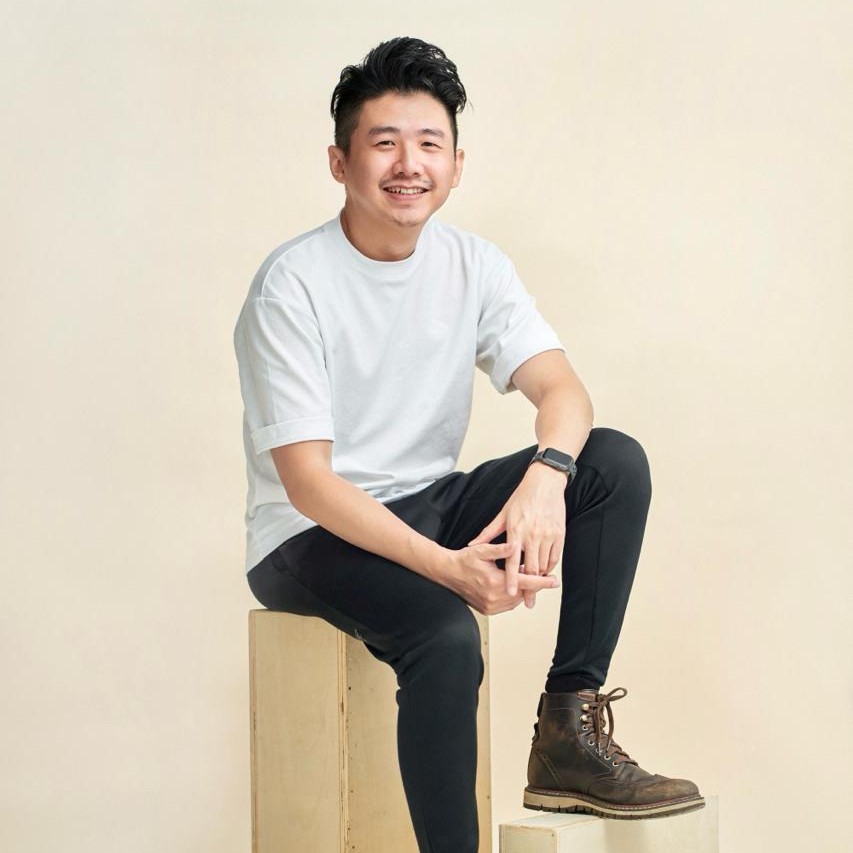
Sylvester Lim - Founder of GradePixel
I’m Sylvester, founder of GradePixel, a commercial photography and video production studio in Singapore with over 10 years of experience. I’ve worked with brands across product, food, fashion, and corporate sectors, helping businesses create clean, effective visuals that drive real results. My focus is always on practical, high-quality production that works for marketing.