
AI Product Photography for Global Ecommerce: How to Scale Across Markets
Visual content requirements multiply when a brand goes international. A product that sells on Shopee Singapore needs one set of images. The same product listed on Amazon US, sold through a UK Shopify store, and marketed on Australian Instagram needs a different set — formatted differently, contextualised differently, and in some categories, shown on demographically [...]
July 5, 2026 • gradepixel

Visual content requirements multiply when a brand goes international. A product that sells on Shopee Singapore needs one set of images. The same product listed on Amazon US, sold through a UK Shopify store, and marketed on Australian Instagram needs a different set — formatted differently, contextualised differently, and in some categories, shown on demographically different models.
For a brand expanding from Singapore into multiple international markets while simultaneously maintaining its Singapore ecommerce presence, producing entirely separate image sets for each market from scratch would be prohibitive. This is where AI photography tools deliver their highest commercial value: multiplying a foundation of accurate studio images across markets, formats, and seasonal contexts — without requiring a new studio shoot for each market or each campaign.
The Visual Content Challenge in Global Ecommerce
When a Singapore-based brand enters international markets, the visual content challenge compounds across four distinct dimensions.
Platform specifications differ by market. Amazon US has specific primary image requirements — pure white background, product filling 85% of the frame, no lifestyle elements in the main image. Amazon Australia has the same requirements but serves a different market context. Shopify stores in the UK operate without strict platform mandates but have different screen resolution conventions and typical image display sizes. Each platform needs correctly formatted, correctly sized files — and “correctly” means something different in each case.
Marketplace aesthetics vary across regions. What converts on Shopee in Singapore — bright, information-dense listings with bold callout graphics and high colour saturation — often differs from what converts on Amazon US, where the listing environment rewards cleaner, more minimal presentation. Lifestyle imagery that resonates with Singapore buyers (local interiors, local food contexts, local urban aesthetics) may read as unfamiliar or irrelevant to US, Australian, or UK buyers. The same product, marketed in the same visual style across all markets, typically underperforms in markets where the style doesn’t match audience expectations.
Seasonal contexts are market-specific. Singapore’s Chinese New Year content, the Hari Raya campaign window, and the 11.11 shopping event have no equivalent in most Western markets. The US holiday shopping season — Thanksgiving through Christmas, spanning November and December — is the highest-revenue content window in that market, requiring specifically themed visual context. Australian summer runs from December to February, which is the UK winter. A brand serving all three markets simultaneously needs seasonal content that’s right for each market at the right time, which means substantially more content variation than a single-market operation requires.
Demographic representation requirements differ. Photography produced for Singapore market listings may feature predominantly Singapore-representative models. Brands expanding into the US, Australia, or UK often find that their existing model photography doesn’t adequately represent the demographic profile of buyers in those markets — particularly for fashion, beauty, and lifestyle categories where aspiration is closely tied to representation.
Where AI Tools Solve the Global Scale Problem
These four content challenges — platform formats, market aesthetics, seasonal context, and demographic representation — are precisely the areas where AI photography tools provide the most practical value.
Market-Specific Environment Generation
A studio hero image of the physical product — accurate, well-lit, on a clean white background — can be placed into multiple lifestyle environments appropriate to different markets using AI background generation tools. The same skincare product can appear on a bathroom shelf styled for a Singapore apartment, a US home, or a UK bathroom without re-shooting the product in each location. The product image is always the accurate studio source; only the environmental context changes.
This approach is particularly valuable for lifestyle and home goods categories, where the environmental context carries significant meaning for the buyer — “does this product fit into my life?” is answered differently in each market.
Demographic Representation Across Markets
AI model tools — including virtual try-on technology for fashion — allow a brand to show the same product on models representing the demographic profile of each target market. For fashion brands expanding internationally, this capability reduces the cost of broad representation significantly: instead of separate model shoots in each market, AI tools generate market-relevant model images from a single studio product image.
The constraint remains: the quality of the source product image determines the quality of the AI-generated model output. A studio ghost mannequin image or flat product shot is the necessary input.
Platform Format Adaptation at Scale
A master product image file from a Singapore studio shoot needs to be reformatted for every platform in every market: 1:1 square at 2000px for Shopee and Lazada, pure white background with specific file size constraints for Amazon, 16:9 landscape for website hero placement, 9:16 vertical for TikTok and Instagram. Doing this manually for every product in every market is significant operational overhead. AI format adaptation tools handle this efficiently from a single master source, maintaining image quality across all output formats.
For brands managing 50+ SKUs across five markets and four platforms, this automation is not a marginal efficiency — it’s the difference between a scalable visual content operation and one that can’t keep pace with market expansion.
Seasonal Content Localisation
With an accurate studio image library in place, generating seasonal variations for each market’s content calendar requires background generation rather than new shoots. US Thanksgiving content, Australian summer lifestyle imagery, UK Christmas-themed product placement, and Singapore CNY backgrounds can all be generated from the same studio source images — adapted for each market’s seasonal context at a fraction of the cost of market-specific shoots.
The Foundation Still Requires a Studio Shoot
The global content multiplication that AI enables only produces commercially viable output when it starts from professionally produced source images of the actual physical product.
For a brand expanding internationally, the stakes of AI-only image generation are higher, not lower. Inaccuracy in a product image that creates returns in Singapore creates the same returns in Australia and the US — multiplied across markets, and compounded by the fact that international returns are often more costly to manage than domestic ones. Material quality that’s misrepresented by AI generation produces the same negative review patterns in the UK that it does in Singapore — and negative reviews on Amazon US carry permanent algorithmic consequences for listing ranking.
The production model that works for global ecommerce: a single, comprehensive studio shoot of each product at the highest achievable quality — producing master images that serve as the foundation for all market-specific AI content generation. The studio investment is made once. AI tools multiply its value across every market, platform, seasonal context, and demographic variation. The cost efficiency of the global content operation depends on the quality of the foundation.
Singapore as a Production Base for International Brands
Singapore’s position as a regional hub — with professional studio facilities, English-language operations, established logistics infrastructure, and a time zone that overlaps with both Asia-Pacific and early European business hours — makes it a natural production centre for brands expanding across multiple international markets.
Brands that shoot their master product image libraries in Singapore can use those images across their full international distribution — Shopee and Lazada in Southeast Asia, Amazon US and UK, Australian marketplace and DTC channels — with AI tools handling the market-specific adaptations downstream. The studio investment in Singapore produces commercial value across every market the brand enters.
GradePixel’s 3,200 sq ft Singapore studio produces master product image libraries for FMCG, beauty, and lifestyle brands including L’Oréal, Sephora, and Singapore Airlines — images that are distributed across international digital channels from a single production engagement. For brands with existing or planned expansion into the US, Australia, or UK, this production model — studio in Singapore, AI-assisted content multiplication by market — is more cost-efficient than commissioning separate photographic production in each target geography.
→ For a detailed guide to how a hybrid AI and studio workflow operates at scale, see our article on how a hybrid AI and studio workflow operates.
→ For a comparison of AI-only and studio photography for ecommerce applications, see our article on AI and studio photography compared for ecommerce.
→ To discuss product photography for international ecommerce applications, visit our product photography studio in Singapore.
Frequently Asked Questions
Can AI photography replace market-specific photoshoots for international expansion?
For content variation — environmental context, seasonal backgrounds, demographic representation, and format adaptation — AI tools significantly reduce the need for market-specific shoots. For primary listing images that require accurate representation of the physical product, a studio shoot remains the foundation that market-specific AI variation is built from. The most cost-efficient model for international expansion is one studio shoot producing master images, with AI tools handling all market-specific adaptation downstream.
How do I maintain brand consistency across multiple international markets using AI?
Brand consistency in AI-generated content starts with visual consistency in the source images. A studio image set produced with a defined visual style — consistent lighting treatment, consistent colour grading, consistent product presentation conventions — provides AI tools with source material that maintains that style across variations. AI tools adapt the context (environment, season, demographic representation); the visual style of the product and brand is carried from the source image.
What is the most cost-efficient approach to product photography for global ecommerce?
A single, comprehensive studio shoot producing high-quality master images, followed by AI-assisted content adaptation for each market, platform, and seasonal context. This concentrates the largest production investment — the studio shoot — into one engagement that generates value across every subsequent content need, rather than distributing production costs across market-specific shoots that each serve a narrower purpose. The efficiency multiplier from AI tools is directly proportional to the quality and completeness of the studio image library they work from.
GradePixel is a product photography studio in Singapore. We produce master product image libraries for brands expanding across Singapore, Southeast Asia, and international markets. Contact us to discuss your global ecommerce photography requirements.
A title
Image Box text
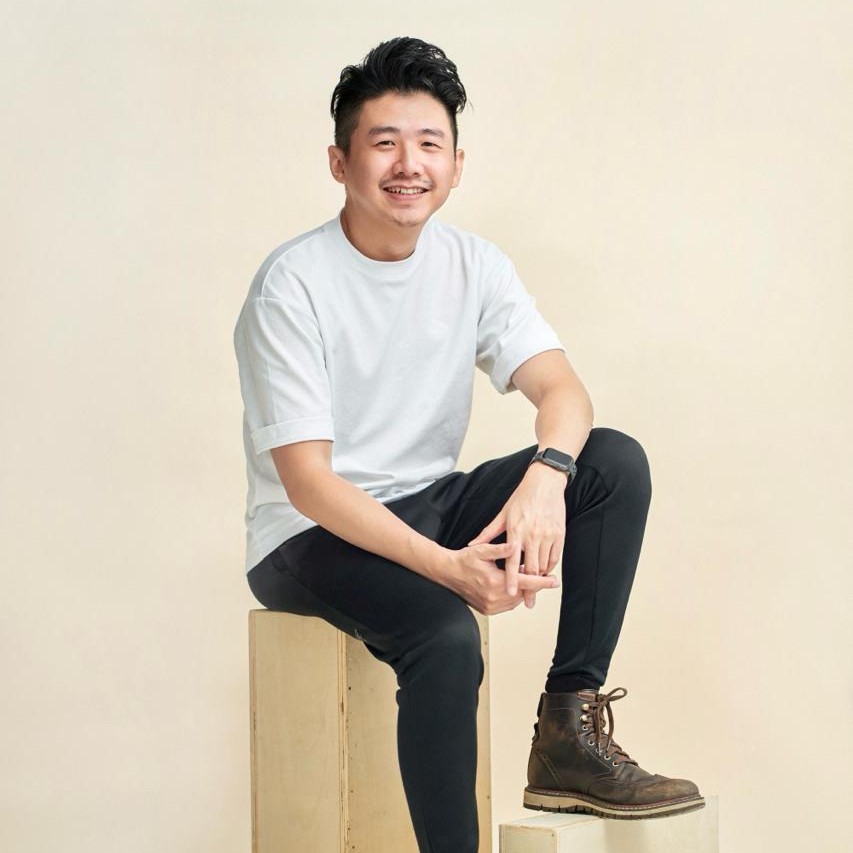
Sylvester Lim - Founder of GradePixel
I’m Sylvester, founder of GradePixel, a commercial photography and video production studio in Singapore with over 10 years of experience. I’ve worked with brands across product, food, fashion, and corporate sectors, helping businesses create clean, effective visuals that drive real results. My focus is always on practical, high-quality production that works for marketing.