
Fashion Product Photography: Flat Lay, Detail & No-Model Approaches
Not every fashion image needs a model. For brands managing large catalogues, shooting at high volume, or working within tighter budgets, model-free fashion photography offers a practical, scalable alternative that still produces professional, platform-ready results. This category — fashion product photography — covers all the approaches that present clothing as a standalone product rather than [...]
June 12, 2026 • gradepixel
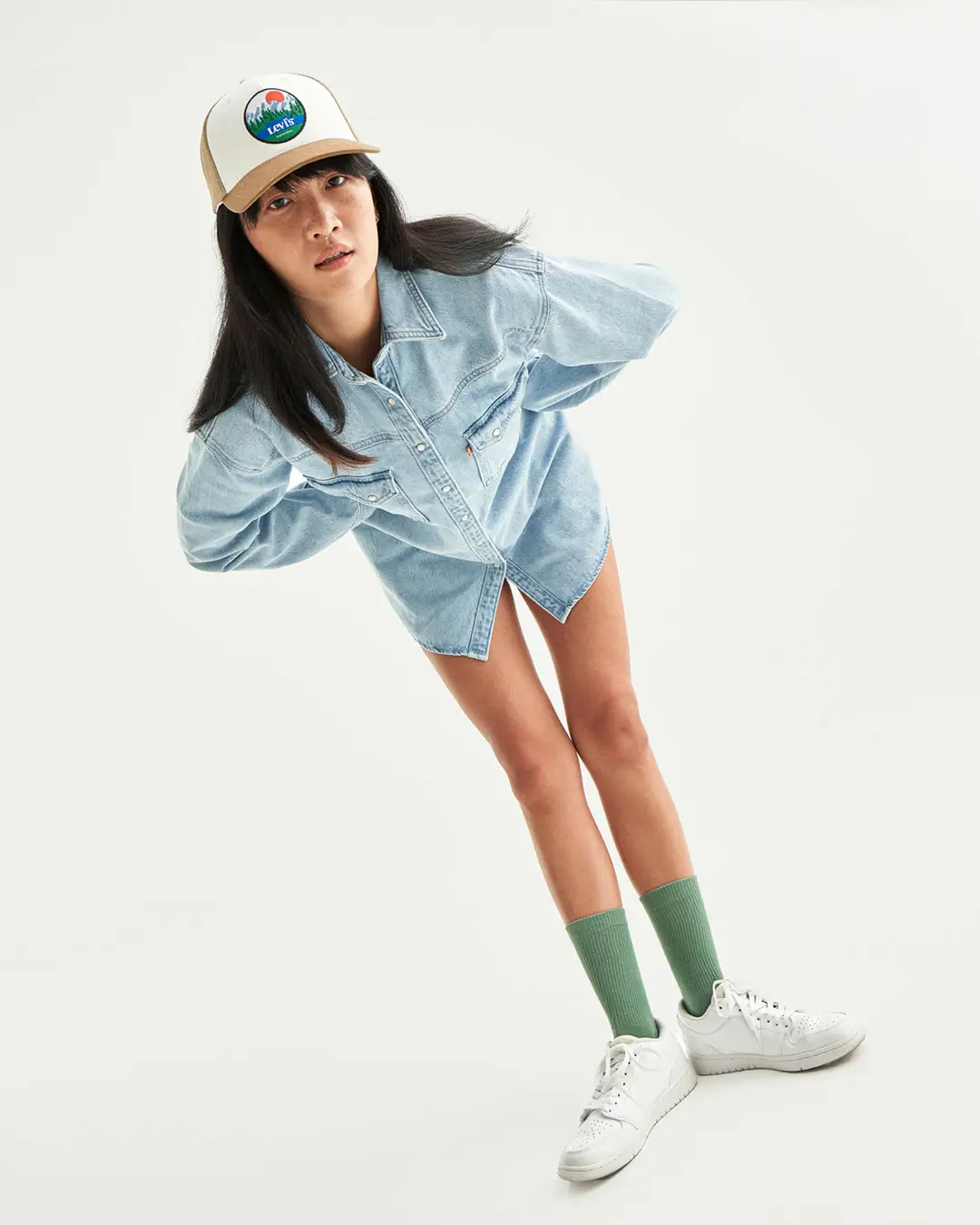
Not every fashion image needs a model. For brands managing large catalogues, shooting at high volume, or working within tighter budgets, model-free fashion photography offers a practical, scalable alternative that still produces professional, platform-ready results.
This category — fashion product photography — covers all the approaches that present clothing as a standalone product rather than as something worn by a person. Flat lay, ghost mannequin, hanger shots, and detail close-ups each serve a different purpose. Understanding when to use each approach saves time, reduces unnecessary cost, and produces a more strategically coherent image set across your catalogue.
What Is Fashion Product Photography?
Fashion product photography is the photography of clothing and fashion items treated as standalone products — without a live model. The subjects are photographed using techniques that communicate shape, quality, and detail: ghost mannequin for three-dimensional garment form, flat lay for top-down composition, and detail close-ups for materials and construction quality.
Unlike on-model fashion photography, where a person communicates how the garment looks worn, fashion product photography communicates what the garment itself looks like — its structure, colour, fabric, and construction — through controlled setup and camera positioning rather than through a body.
Fashion Product Photography vs. On-Model Photography
The choice between product-based and on-model photography is not about which is better — it is about which serves the specific garment and platform context most effectively.
| Fashion Product Photography | On-Model Photography | |
|---|---|---|
| Model required | No | Yes |
| Cost per SKU | Lower | Higher |
| Garment fit shown | Shape only (ghost mannequin) or flat | Full body context and proportion |
| Production speed at volume | Faster | Slower per look |
| Best platform fit | Shopee, Lazada, trade catalogues | Zalora, brand websites, campaigns |
| Best garment types | Structured garments, accessories, folded items | All garment types; essential for activewear and draped fabrics |
Most established fashion ecommerce brands use both. Product photography handles the volume of the catalogue efficiently; on-model photography handles hero SKUs, premium pieces, and lifestyle content.
Types of Fashion Product Photography
Ghost Mannequin Photography
Ghost mannequin photography produces a three-dimensional, wearable-looking garment image by shooting the clothing on a physical mannequin and removing the mannequin in post-production. The final image shows the garment in a natural shape — as if being worn, with visible interior detail at the collar, armhole, and hem — without any mannequin or model in the frame.
Ghost mannequin is the most effective product photography approach for structured garments: outerwear, blazers, structured dresses, trousers, and any category where the garment’s shape and silhouette are the primary purchase consideration.
→ For a detailed guide to how ghost mannequin photography works and which garment types it suits, see our article on ghost mannequin photography.
Flat Lay Photography
The garment is laid flat on a surface and photographed from directly above. Flat lay is fast, cost-efficient, and performs well for certain garment categories — but it communicates very little about fit or how a piece looks on a body.
Standard flat lay: Garment spread neatly on a white or neutral background, front-facing, minimal or no props. This is the most basic product photography format — effective for initial catalogue builds and internal reference images.
Styled flat lay: The garment is arranged on a textured or brand-matched surface with a small number of complementary props — a belt, a watch, a folded accessory. Adds brand context without requiring a model or complex setup. Particularly effective for accessories photography and for brands with a strong flat lay aesthetic on social media.
Knolling: A more systematic arrangement where multiple items — a full outfit, a set of accessories, a collection of components — are laid out in a precisely aligned, symmetrical or geometric composition. Knolling images work well for lookbook-adjacent social media content and for multi-piece set promotions.
Hanger Shot
The simplest format: the garment on a hanger against a clean background. Hanger shots are efficient and very low cost, but they are also the least effective format for communicating garment shape, fit, or quality. Structured garments look flat on a hanger; drape fabrics lose their character entirely.
Hanger shots have a place in very early-stage catalogues, in internal inventory systems, or as placeholder images before a full shoot is scheduled. For any public-facing ecommerce listing where buyers are making purchase decisions, hanger photography sets a low quality ceiling.
Detail and Close-Up Photography
Close-up detail shots focus on specific elements of the garment — fabric texture, stitching quality, hardware, embroidery, lining, zip construction, or any design feature that differentiates the product from category competition.
Detail shots serve two functions. For the buyer, they reduce uncertainty by showing what the product is actually made of — and reducing return rates that come from mismatched quality expectations. For the brand, they signal attention to craft and quality that positions the product above a plain listing image.
Detail photography is most valuable for premium and mid-market brands where construction quality is a selling point, and for any category where fabric or material characteristics are a purchase decision factor — knitwear, leather goods, tailored garments, and technical sportswear.
Flat Lay Fashion Photography: Practical Setup
Flat lay is accessible enough to produce in-house with the right setup. The quality ceiling is lower than ghost mannequin or on-model, but for the right garment types and use cases, a well-configured flat lay setup produces consistent, commercial-grade results.
Camera position: Directly overhead, perpendicular to the surface. Mount the camera on a camera arm, a tripod extended over the surface, or a ceiling-mounted rail. Any angle other than perfectly overhead creates distortion at the edges of the frame that requires correction in post.
Lighting: Even, diffused illumination across the full surface. A large overhead softbox or two continuous LED panels positioned at 45 degrees on either side of the surface produce shadow-free, even light. Avoid a single direct overhead light — it creates a harsh central highlight with dark edges.
Background: White seamless paper for ecommerce listings. For lifestyle-oriented flat lay content, textured surfaces — slate, wood, marble-effect — add visual interest. Keep the background tone complementary to the garment’s primary colour rather than competing with it.
Styling: Steam every garment before laying it flat. Lay it with deliberate folds, smooth any wrinkles from the surface outward, and tuck any visible underlining or interior elements out of frame. Small clips or pins placed under the garment — invisible to the overhead camera — can hold shapes and prevent movement between frames.
When to Use Each Approach
The decision framework for matching photography approach to garment type and platform context.
| Situation | Recommended approach |
|---|---|
| Large-volume structured garment catalogue | Ghost mannequin — efficient, no model cost |
| Accessories (bags, belts, jewellery, hats) | Flat lay or detail shots |
| Outerwear and tailored garments | Ghost mannequin |
| Activewear and performance garments | On-model — shows movement and fit |
| Fluid and drape fabrics (silk, chiffon) | On-model — shape depends on a body |
| Entry-level or fast fashion catalogue | Flat lay or hanger |
| Premium brand with craft as a selling point | Detail shots alongside on-model or ghost mannequin |
| Hero SKUs and seasonal campaign pieces | On-model |
Fashion Product Photography for Singapore Ecommerce
Singapore’s main fashion ecommerce platforms support all product photography formats. Shopee and Lazada both accept ghost mannequin and flat lay images as main listing images — the primary requirement is a white or light neutral background with the garment clearly visible.
Zalora applies a higher visual standard and strongly prefers on-model photography for apparel. For brands listing on Zalora, ghost mannequin and flat lay are better suited to secondary image slots than the primary listing image.
For brands managing mixed catalogues — some structured garments suited to ghost mannequin, others requiring on-model — a combined approach allows the full catalogue to be shot in a single studio session with a logical split between formats.
→ For a full guide to platform requirements and shoot types for Singapore’s fashion ecommerce platforms, see our article on ecommerce fashion photography Singapore.
→ To discuss your catalogue photography requirements, visit our fashion photography studio in Singapore.
Frequently Asked Questions
Is flat lay or ghost mannequin better for Shopee listings?
Both are accepted on Shopee as main listing images, provided the background is white or light neutral. Ghost mannequin generally produces a more professional result for structured garments — the three-dimensional shape communicates fit more clearly than a flat lay. Flat lay works better for accessories, folded items, and soft unstructured garments that do not hold a recognisable shape on a mannequin.
Can fashion product photography replace model photography entirely?
For some brands and garment categories, yes — ghost mannequin produces images that perform well on Shopee and Lazada without a model. But for premium positioning, Zalora listings, lookbook content, and any garment where fit on a body is the primary purchase decision, on-model photography cannot be fully replaced by product-based approaches.
What backgrounds work best for fashion flat lay photography?
White seamless paper is the most versatile and is required for platform-compliant listing images. For lifestyle-oriented social media flat lay content, textured neutral surfaces — light wood, stone, slate, linen fabric — add visual interest without competing with the garment. Keep background tone consistent within a collection to maintain visual cohesion across the catalogue.
GradePixel is a fashion photography studio in Singapore. We produce ecommerce catalogues, ghost mannequin shoots, and product photography for fashion brands across Singapore. Contact us to discuss your project.
A title
Image Box text
Sylvester Lim - Founder of GradePixel
I’m Sylvester, founder of GradePixel, a commercial photography and video production studio in Singapore with over 10 years of experience. I’ve worked with brands across product, food, fashion, and corporate sectors, helping businesses create clean, effective visuals that drive real results. My focus is always on practical, high-quality production that works for marketing.